

Batting on Different Pitches: The 2026 Pro Guide to Red & Black Soil
Today, I’ll share the secrets to batting on different pitches, whether it’s red soil or black soil. Batting on different pitches at different times of day is very challenging, especially if you’re an opener or a middle-order batsman. Let’s break it down.
Quick Navigation – What’s Inside:
Difference Between Red & Black Pitches
Let’s get straight to it – knowing your surface is half the battle won.
Red Soil Pitches are what I call “The Batting Paradise.” I call it that because these wickets give so much comfort to batsmen. If the pitch is dry, the ball comes onto the bat easily, and a batsman can score tons and tons of runs with good technique. BUT what if the pitch has a little bit of moisture in it? Or what if a very good bowler is bowling against you? What shots can we play to score runs on this pitch? I will answer all these questions in the upcoming section.
Black Soil Pitches are the tricky ones, where batters need to be cautious and have great reaction time. On red soil, you can play the ball late – you can wait for it to come to you. but on black soil, it’s the opposite. You still need to play the ball close to your body, but you don’t have as much time on black wickets as you do on red. Judging the ball’s length and making a decision has to be fast. Which shot to play, and which not to, all depends on your decision-making and your reaction time.
Batting on Different Pitches: Mastering Red Soil
Red Soil Pitches – Wow, how it may sound, though? “Spinners’ Heaven,” where the ball turns degrees, and pace bowlers get plenty of swing. So for batsmen, the question is: how do you score more runs on these pitches and stay at the crease for a long time? Let’s discuss some techniques to play as a batsman on red soil pitches.
- Against Fast Bowlers: If you’re batting against very good pace bowlers, the first thing you have to set in your mind is to play the ball close to your body. Let me explain: imagine a box (approx. 4 x 4 feet) in your mind in which you are standing after taking your stance. Now, be true to yourself that you will only play a shot if the ball comes into this imaginary box; otherwise, you leave it. What does this give you? If there’s a very good outswinger, the probability of edging the ball is less. Also, if you have waited for the ball to come into that box, the probability of hitting it with good timing is far greater than that of a normal player who hits the ball away from the body.
Mastering this timing is a skill in itself. If you want to dive deeper into the art of connecting sweetly, check out my full guide on how to time the ball.
- Against Spin Bowlers: Playing spin bowling on a red wicket is a nightmare for many batsmen because the ball turns so many degrees that it’s sometimes hard even to score runs. But in this section, I will help you turn that nightmare into your strength. The main thing you have to keep in mind when playing against a spinner on a red wicket is to always look for runs square of the wicket rather than straight. Why? Because when you try to score runs straight – i.e., to long-on, long-off, or even covers: there’s a higher probability you’ll edge the ball if it’s bowled in the perfect area. Instead, you can score runs square of the wicket – i.e., point or square leg. Shots like the sweep, cut, or paddle scoop are perfect for this kind of pitch.
Remember, always learn to see the bowler’s release, like what bowl is going to deliver, is it a normal spin ball or an arm ball, then plan the shot accordingly.
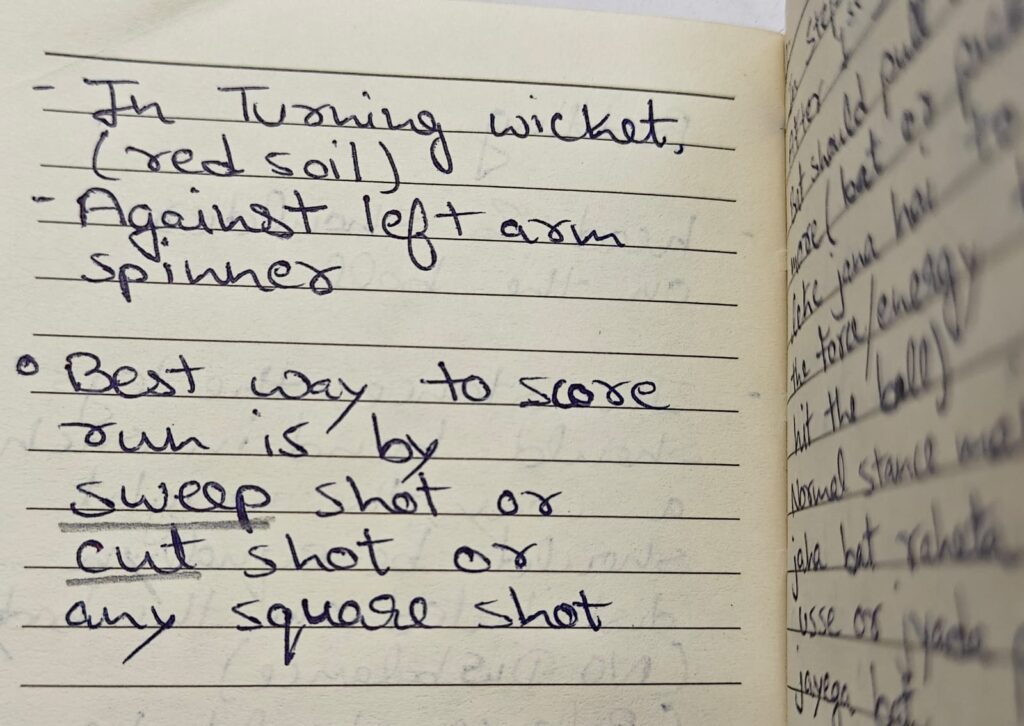
You will find these types of pitches mostly in India or neighbouring country.
Batting on Black Soil Pitches: The Trust Game
Black Soil or Green Top Wicket, where pacers have the advantage and spinners do their tricks. What can a batsman do? Here, a batsman’s movement and instinct are everything they need. Let’s break it down:
- Against Fast Bowler: Here, I’m not talking about any normal bowler, because on these pitches, a regular pace bowler can bowl really fast due to the low friction between the ball and the ground. This causes the ball to skid, deviate, and bounce really quickly. So what can a batsman do? First, make your decision fast (as I mentioned earlier). Second, don’t play with a long stride against a pace bowler – you won’t have that much time. You have to trust your timing and solely focus on middling the ball (meaning the ball has to hit the sweet spot of the bat). That’s when you will gain confidence and play more and more balls with good intent.
Speaking of the sweet spot, making sure your bat is perfectly suited to you is half the battle. I break down how to pick the right one in my complete guide on how to choose a cricket bat.
- Against Spin Bowler: Okay, so here everything gets trickier. Imagine you are playing against a left-arm spinner, and you don’t know which ball is going to turn and which is the arm ball. The best way to tackle this is by playing more balls on the front foot than the back foot, and by playing straighter – in the “V” of the ground, rather than squarer. This is because you won’t know which ball comes in and which goes out. Also, when playing defensively, keep one thing clear: defend the ball in front of your pads. This helps you reduce the chances of being given LBW.
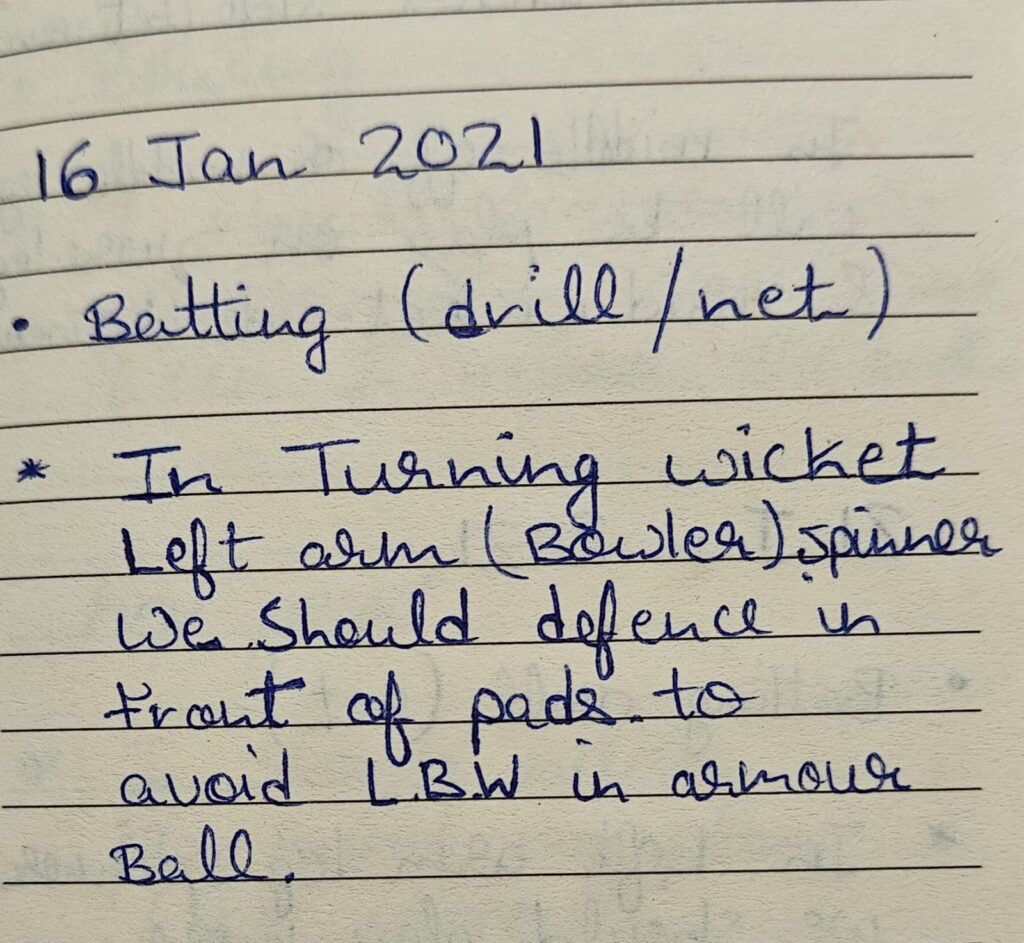
These kinds of pitches are mostly found in Australia and England.
How Pitch Conditions Change During a Match
You’ve often seen captains choose to bowl after winning the toss, especially in the morning. Why? Two main reasons: dew and swing.
Early on, the outfield is often damp with dew, which makes it difficult for bowlers to grip the ball properly. More importantly, the moisture in the air and on the pitch helps the ball swing significantly, making life very tough for the batters.
However, as the morning progresses into the afternoon, the sun dries out the pitch and the outfield. The ball stops swinging as much, the pitch firms up, and batting becomes considerably easier. That’s why teams batting second—after the pitch has dried up—often find it much easier to score runs.
Common Mistakes & How to Avoid Them
A common mistake when batting on different pitches that players make is…
On Red Soil:
- Playing away from the body too early.
Fix: Give yourself time. Play straight until you settle. Once you settle, try to go for more runs.
On Black Soil:
- Playing back when you should be forward.
Fix: When in doubt, stride forward. It reduces the risk of being LBW or even bowled.
Pre-innings Routine
Always reach the ground before match time, as this will give you enough time to analyse the pitch conditions and prepare your mindset against the bowlers accordingly.
This are some steps that I followed and you can follow too:
- Walk on it (with permission!): Feel the surface under your spikes, or just touch the pitch with your bare hands to check for moisture or dryness.
- Talk to your teammates: who bowled in warm-ups. Ask: “How’s it coming on?”
- Watch the first few overs closely: Whether you are in the batting team or the bowling team, it’s important to watch the first few overs closely. See how the ball behaves off the pitch and out of the bowler’s hand. Even if you’re batting at the time, you can analyse from the non-striker’s end.
- Make a mental note: “Red soil: back foot ready.” or “Black soil: front foot first.”
This routine is especially crucial when batting on different pitches, as conditions can change hourly.
Final Word
Honestly, batting is not just about technique – it’s about awareness. The key is that you don’t have to remember all the rules again and again. You just need to focus on playing as many matches as you can. When you play multiple matches, you automatically understand it. That’s why experience matters more than anything else.
Mastering the art of batting on different pitches will make you a complete, adaptable player.