
How to Choose a Cricket Bat: Complete Guide 2026
Choosing a cricket bat is one of the time taken but main tasks in cricket. In fact, I took hours and hours to choose a cricket bat that helps to replicate my batting style.
This comprehensive guide on how to choose a cricket bat will save you hours of confusion and help you make an informed decision.
Quick Navigation – What’s Inside:
Key Areas:
Bat Feel and Balance (Most important)
This is one of the main departments to look for before choosing a cricket bat. Let’s take an example from my own experience to know what it means.
Once I wanted to buy a bat and I went to a cricket shop. They showed me many bats from which I chose two. Now, see that the first bat, which I chose, was of a weight of 1178 grams, and the second bat’s weight was 1180 grams. When I took the 2nd bat, it felt lighter compared to the 1st bat. Why? Because the weight is distributed on the bat so perfectly that I don’t even guess its original weight.
My advice when you go to a shop is to take some bats that are showcased there and do shadow practice. You will automatically realise which bat has good balance and is suitable for you, and which is not.
Getting the right bat balance is the first step. Once you’ve found it, the next challenge is learning how to time the ball consistently, which I break down in my dedicated timing guide.
Bat Quality and Willow Grade
Learning how to choose a cricket bat with the right willow grade is crucial for long-term performance. Okay, so it is one of the main things to look for in a cricket bat.
Let me be truly honest with you guys: most of the bats you purchased are either selected willow or low-quality willow bats. Now you’re wondering why I’m saying that. It is because I have many manufacturer friends, and from them I got to know that the market is full of selected willow bats.
If you want a genuine English Willow bat, then you need to import it from other countries, or you need to spend ₹20-30k to purchase it within the country. Now I think you are smart enough to understand why it is happening.
What to do now? Don’t be scared of all these. You can look at the ping before purchasing the bat. Also, when you see the bat, you can tell how it is (you get to know automatically from experience).
There is also a thing like grades in a bat, which basically tells how good the wood of the bat is. For example, a Grade A bat is much better than a Grade B bat, BUT a Grade B bat is cheaper than a Grade A bat. So, from my advice, always go for the bat which falls into your budget and also for the level you are playing at. (higher level = higher grades, because cheap quality won’t last longer when facing 130-135 kmph)
For the most authoritative specifications on legal bat dimensions and materials, always refer to the official Laws of Cricket by the MCC, which governs all equipment standards.
Bat Weight & Comfort
Many players overlook this when deciding how to choose their cricket bat, but weight distribution matters more than total weight.
Some difference in weight doesn’t mean anything unless you are balance-driven, but a fine balance bat costs a hefty amount of your money. So it’s better to go for a universal weight that most players use, like commonly around 1180 grams is used by professional players.
But there are also some exceptions like Chris Gayle, whose bat is way heavier than normal bats, which helps in hitting the ball way bigger and longer.
Honestly, in my opinion, a lighter bat is more advisable as it gives you a faster bat swing than a heavier bat, which ultimately helps you to play 130kmph+ deliveries easily.
In women, they generally have lighter bats as compared to men, likely around 1100-1150 gm.
Some players bat weight:
Virat Kohli (MRF): 1180 – 1220 grams
Chris Gayle (Spartan): around 1360 grams
MS Dhoni (Spartan): 1180 – 1270 grams
Note: Sources Google
Grains: The Visible Gem on Bat
When learning how to choose a cricket bat, checking the grains is a key step many overlook.
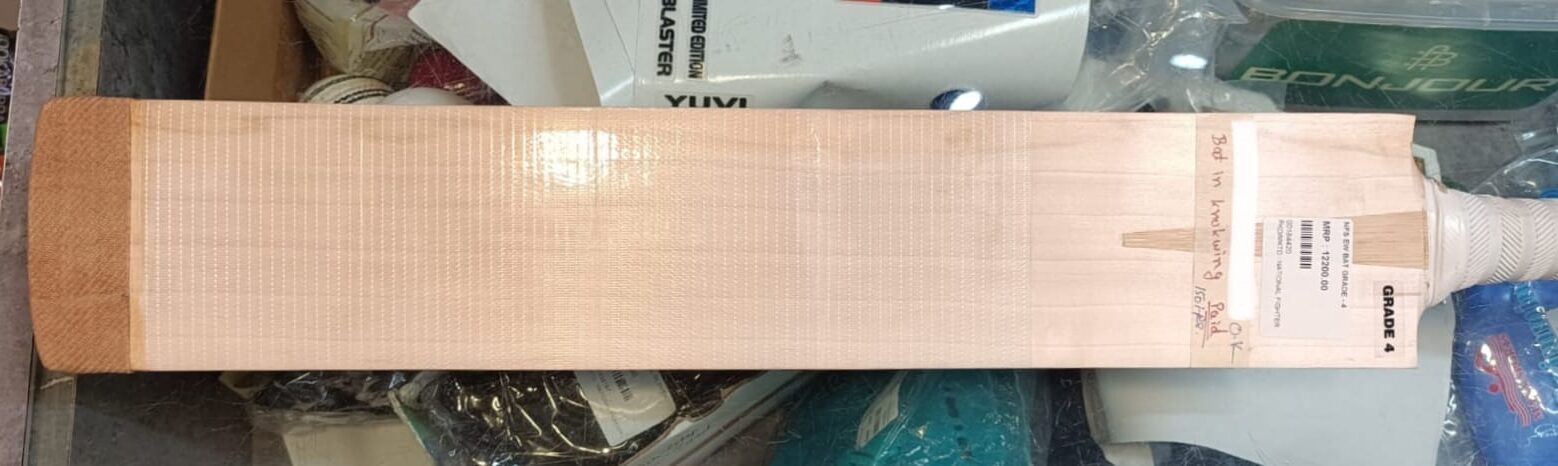
First, what are grains? It is the straight line mark on the bat surface. Basically, a bat with a higher number of grains gives more power to the bat but has less lifespan and vice versa, as far as I know. (low grains = more lifespan). So what to choose? Most professional players buy a bat where grains lie between 6-8, as it gives solid power and also a good lifespan.
Again, you should concisely look at willow quality as well before buying the bat.
Grip: The Game Changer
This is an often-forgotten but vital part of how to choose a cricket bat that feels right.
For many players, grip plays a pivotal role in a bat. When I play cricket, I usually have 2-3 grips on my bat. It is because it feels so lighter when you have multiple layers of grip on a bat. Obviously, it makes the bat heavier, but when you play pace bowling, and you mistime it, and the ball doesn’t hit the sweet spot but rather hits on the bottom or top, the jerk that is created is absorbed by the multiple grips.
That’s why Kieron Pollard had 7 grips on his bat.
Remember, your connection to the bat doesn’t end with the grip. Protecting your hands with the right batting gloves is equally crucial for comfort and safety. I’ve tested and reviewed the top options in my complete bat gloves review.
The “Try Before You Buy” Checklist:
Here’s my practical checklist for how to choose a cricket bat in the store:
- Pickup test (feels light?)
- Knock sound (solid “ping”?)
- Grain check (6+ straight grains)
- Weight check (match your height/strength)
- Budget reality (“Do I need ₹10k bat for weekend cricket?”)
Follow this checklist step-by-step, and you’ll master how to choose a cricket bat with confidence.
Conclusion
In my early days, I always believed expensive bats were the ones I was looking for, which helped me to score more runs, helped me to hit bigger sixes and on and on and on.
But no, darling, it is just a HOAX. After experiencing it, I can definitely tell you expensive doesn’t mean you will score tons of runs, and a cheaper bat doesn’t mean you can’t hit big sixes. You just need to know at what level you are competing and the budget you planned.
You need to be confident enough and have the guts to play with any season bat. You need to believe in your hard work, net practice and determination as a bat won’t decide what type of player you are.
Finally, remember that the best bat in the world won’t help without solid technique. Pair your new bat with dedicated practice, especially on mastering the art of how to time the ball.
Good Luck & You Will Going To Have A Fantastic Year Waiting For You!!!
Let me know which bat you use & what it costs in the comment below 😉
FAQ: How to Choose a Cricket Bat
What is the most important factor in how to choose a cricket bat?
Balance and feel are the most important factors. A well-balanced bat will feel lighter and give you better control, regardless of its actual weight.
How much should I spend on my first cricket bat?
For beginners, focus on a bat in the ₹5,000-₹10,000 range. As you advance, invest in higher-grade willow. Remember, expensive doesn’t always mean better for your level.
How do I test if a cricket bat is right for me?
Use our “Try Before You Buy” checklist. The pickup test and shadow practice are the best ways to know immediately if a bat suits your style. Trust how it feels in your hands.
Can a cheap bat perform as well as an expensive one?
Yes, for casual or weekend cricket. The key is finding a bat with good ping and balance within your budget. Your skill and timing matter more than the price tag.
How many grains should a good cricket bat have?
Most professional players prefer bats with 6-8 straight grains. This offers a solid balance of power and durability. Fewer grains often mean more lifespan; more grains can mean more power but potentially less durability.
2 Comments